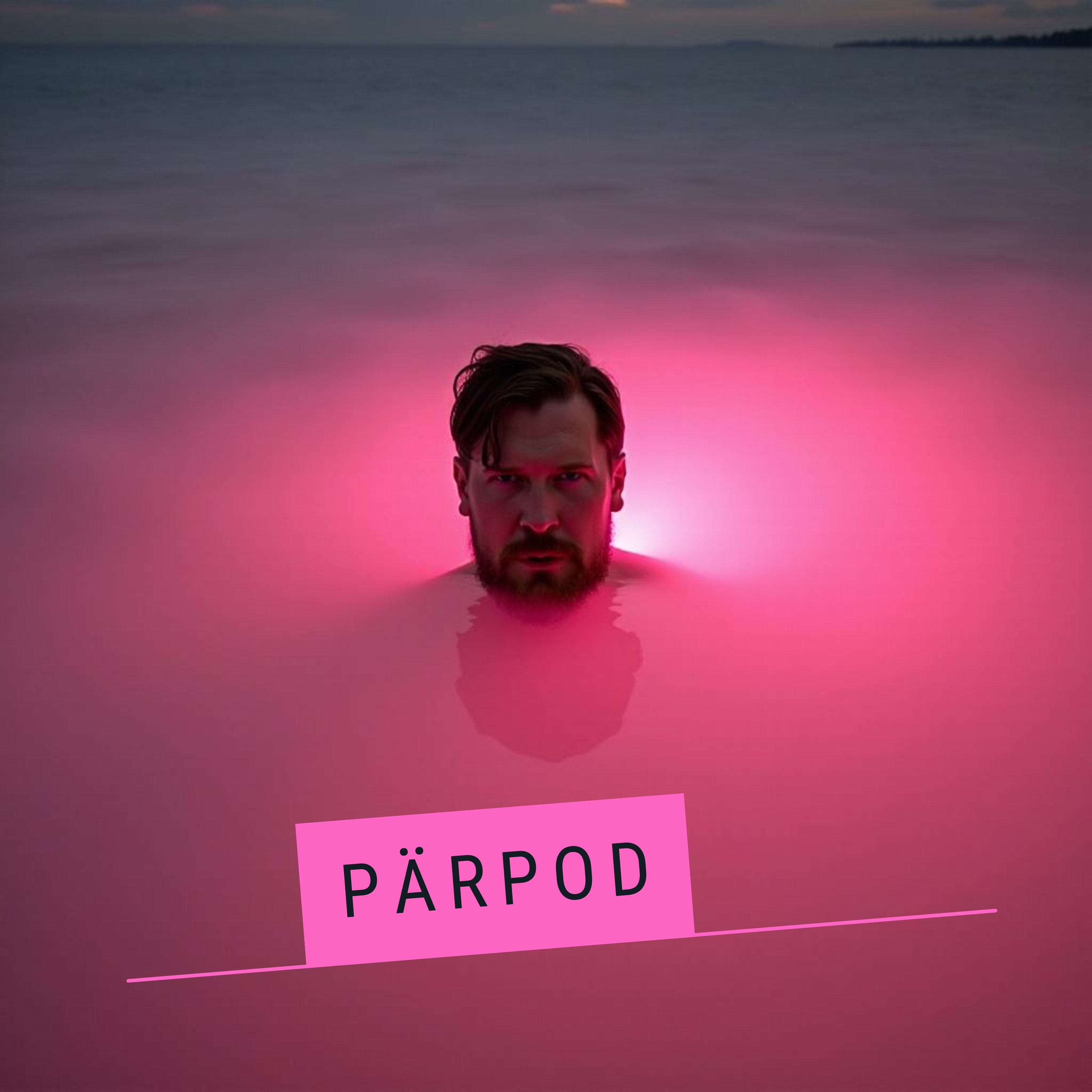
Eighty Eight Days: The Impossible Math of Paer Boman
The Dossier
Subject: Paer Boman. Male. Born mid nineteen eighties. Location: Kall, population negligible, Jaamtland, northern Sweden. Occupation: five. Repeat, five concurrent occupations. Mail carrier, gas station attendant, bartender, shop demo specialist, occasional radio journalist. Monthly personal burn rate: twelve thousand kronor. Monthly company burn rate: nineteen thousand. Buffer: zero.
And the sixth job?
He runs a newspaper. Bought it for one point three million kronor. Three hundred thousand up front, the rest over five years. No salary from it. The paper pays for his car, his housing, and his AI subscriptions. He committed to five years. That clock started ticking in late twenty twenty two.
He cannot code.
That is correct. Not modestly, not in the way senior engineers claim incompetence while pushing elegant abstractions. Literally cannot write a line of code from memory. Cannot read a stack trace. Cannot debug a variable. This is a hard constraint, not a soft one.
And yet.
And yet. Twenty repositories. Six hundred eighty nine commits. A multi service VPS infrastructure. A productivity suite. A podcast pipeline. A newspaper management system. Deployment scripts, search engines, MCP servers, database schemas.
Timeline?
Eighty eight days.
The Incubation
Here is what makes this story worth telling. It is not that someone who cannot code built software. Plenty of people have done that with AI. The interesting part is what happened in the eleven hundred and ten days before.
Because from the outside, nothing happened. A man in a small Swedish village bought a local newspaper. He delivered mail. He poured drinks. He published eighteen issues a year, A four format, full color, delivered free to sixty five hundred households. He used ChatGPT the way everybody used ChatGPT. Paste a sentence, get a rewrite. Paste an interview transcript, get a draft.
Four point five sessions per month. Average. Unremarkable. A tool user, not a builder.
But here is what the data shows when you actually count. Three hundred and eighteen published articles across fifty eight issues. AI involvement went from three percent in the first half of twenty twenty three to forty three percent in the first half of twenty twenty five. Slow. Steady. And completely invisible to anyone not counting.
He was not learning to code. He was learning to direct. Every article session was the same loop. Paste input, get output, iterate with single phrase instructions. "Paa svenska." "Mer citat." "Kortare rubrik." An editor directing a writer. A thousand repetitions of the same collaboration pattern, the same trust calibration, the same feedback loop.
And then the images hit.
The Arsenal
April twenty twenty four. Automatic eleven eleven. One thousand and nineteen images between April and September, confirmed by PNG metadata. He installed it himself, without AI help. That detail matters because every previous analysis got it wrong. They assumed the AI obsession began with AI assistance. It did not. It began with obsession.
Total AI spending across the incubation period: forty six hundred dollars. Sixty three percent of it on image generation alone. ThinkDiffusion: thirty two hundred dollars across fifty transactions. RunPod: just over a thousand dollars across fourteen transactions. The infrastructure costs of a person teaching themselves what client server architecture means by accident.
That is the hidden curriculum. Every time he configured a checkpoint, he learned about dependencies. Every time he connected to a cloud GPU, he learned about APIs. Every time a pipeline failed and he had to restart from a different node, he learned about infrastructure. Docker. Multi step workflows. Client server architecture. Latency. Cost optimization.
By September twenty twenty five, without ever writing a single line of code, he could design client server architecture from scratch, specify feature per file modularity, and independently invent "code drift" as a version control concept. He transferred it from face drift in WAN video generation. The vocabulary came from images. The grammar came from directing ten thousand article rewrites.
Nobody noticed. Including him. He thought he was generating pictures.
September
Five things converge in September twenty twenty five.
One. His summer job at Sveriges Radio ends. The last external structure in his week disappears. For an ADHD brain, removing structure does not create rest. It creates ignition.
Two. September ninth. He starts an off the books Elvanse experiment. Self medication, one day after peak image generation. Lisdexamfetamine. The ADHD stimulant that turns scattered bandwidth into a beam.
Three. Eight months of accumulated image and infrastructure work crosses a threshold he cannot see from inside.
Four. ThinkDiffusion costs hit six hundred dollars in a single month. The question shifts from "what can I generate" to "what if I owned the compute." Architecture thinking.
Five. September twenty first through twenty third. Two hundred and eleven messages. The Paerception spec. A complete software product design, written by a man who cannot code, in a tool he had been using to rewrite newspaper sentences.
Sixteen sessions in August. Fifty nine in September. Three thousand four hundred and fifty five messages. The explosion.
And when the Elvanse stopped October first?
Sessions dropped thirty five percent. But they never returned to pre September levels. Something structural had changed. The data cannot separate the medication from the momentum from the missing structure from the accumulated skill. Four fuses lit at once. The honest answer is that nobody knows which one was the detonator.
The Nine Days
December twenty twenty five. His mother dies after hospitalisation in Helsingborg. He drives north alone. Somewhere on that drive, grief opens a gap in the noise.
December twenty seventh. He opens a Claude session. Types something close to: "They say you are better at code." Hands over an existing codebase. Popcorn. His VPS configuration.
Claude finds weaknesses that GPT and Gemini missed. Names the gap in one sentence. "You are at that sweet spot where you understand the ecosystem and can architect solutions, but you prefer getting complete runnable code rather than diving into the implementation details yourself."
He had never heard his own capability described that precisely by anyone, human or machine.
December twenty ninth. Parked on the road to Oslo. An agentic experiment. The concept of autonomous AI coding plants itself. Not copy paste. Not chat. A system that reads files, writes files, runs commands, and builds.
January second, twenty twenty six. The first git repository appears.
January fourth. First Claude Code session. Thirteen messages to accomplish what previously took two hundred and thirteen. The copy paste era ends. The filesystem era begins.
Eighty eight days later: twenty repositories. Six hundred eighty nine commits. Everything.
The Two Thirds
Now here is where most stories would end. Man discovers tool, man builds empire, credits roll. But the data does not support that ending.
One thousand nine hundred and eleven sessions were analyzed. Every single one classified by outcome. The number that produced direct, tangible output?
Thirty one point five percent.
Sixty eight point five percent of all sessions produced nothing. No article, no commit, no tool, no artifact. For every thing built, two sessions went nowhere. The RunPod serverless experiment alone consumed five hundred and sixteen messages across twelve sessions and produced exactly zero images. The website rebuild took three hundred and seventy seven messages and changed nothing. StoryMaker. LifeLab. The AI server build. Dead ends totaling nearly two thousand messages.
This is not a failure statistic. This is a portrait. The ADHD brain does not allocate efficiently. It allocates passionately. Big exciting idea waves. Hyperfocus. Spin up whole ecosystems in parallel. Then abruptly move on. The two thirds that produced nothing are not waste. They are the exploration cost. The sessions that built vocabulary, tested boundaries, planted seeds that germinated months later.
But if you only count the visible output, you are looking at a third of the man.
The Constraints
Current status. Locked into a five year newspaper commitment, expiring late twenty twenty seven. Five part time jobs, total income: enough. Buffer: none. AI subscription costs climbing, now roughly two hundred dollars per month. Internet: rural Swedish, unreliable. His historical pattern: changes direction every two years when bored. Twenty twenty five was, quote, a bad year. Uninspired by the newspaper. AI was the highlight.
So the ADHD escape pattern is structurally blocked.
Correct. The novelty need is being redirected into software projects. Director. PaerKit. The podcast pipeline. The experiments directory. But the commitment window is fixed, and the financial margins are real.
He does not want a sunny narrative. That is in the file. Every time the analysis produced a clean story, his corrections went in the same direction. Less flattering. More accurate. RunPod never worked. Two thirds produced nothing. November was grief, not inspiration. The memory compresses everything by roughly one year. The pre code era felt shorter than it was.
He wants the real picture. Including the parts that do not look good on a slide.
The Math
So here is the math. A person who cannot write code. Five jobs that do not add up to one salary. A newspaper that costs more than it earns most months. An ADHD brain that historically bails after two years. Rural internet. Zero financial buffer. A mother recently buried. A father who moved in.
And in eighty eight days, more functioning software than most hobbyist programmers build in a year. Claude Code production rate: one hundred percent. Every single session produced output. Versus ChatGPT at thirty one percent. The tool was the variable. Not the medication, not the motivation, not the structure. The tool.
The AI is not a tool he uses. It is the reason the current life architecture works at all. Without it, the newspaper is just a newspaper. With it, the newspaper is a platform, and the person running it is building an ecosystem around it.
Whether that ecosystem survives contact with twenty twenty seven is the open question. The data says: when Paer has the right tool and no external structure, he builds at extraordinary speed. The data also says: two thirds of that energy produces nothing visible, the margins are razor thin, and the commitment window is a wall he chose before the diagnosis.
Remarkable capability. Remarkable constraints. And a permanent open question about which one wins.
End of dossier. Subject status: active. Threat level to conventional career paths: total.