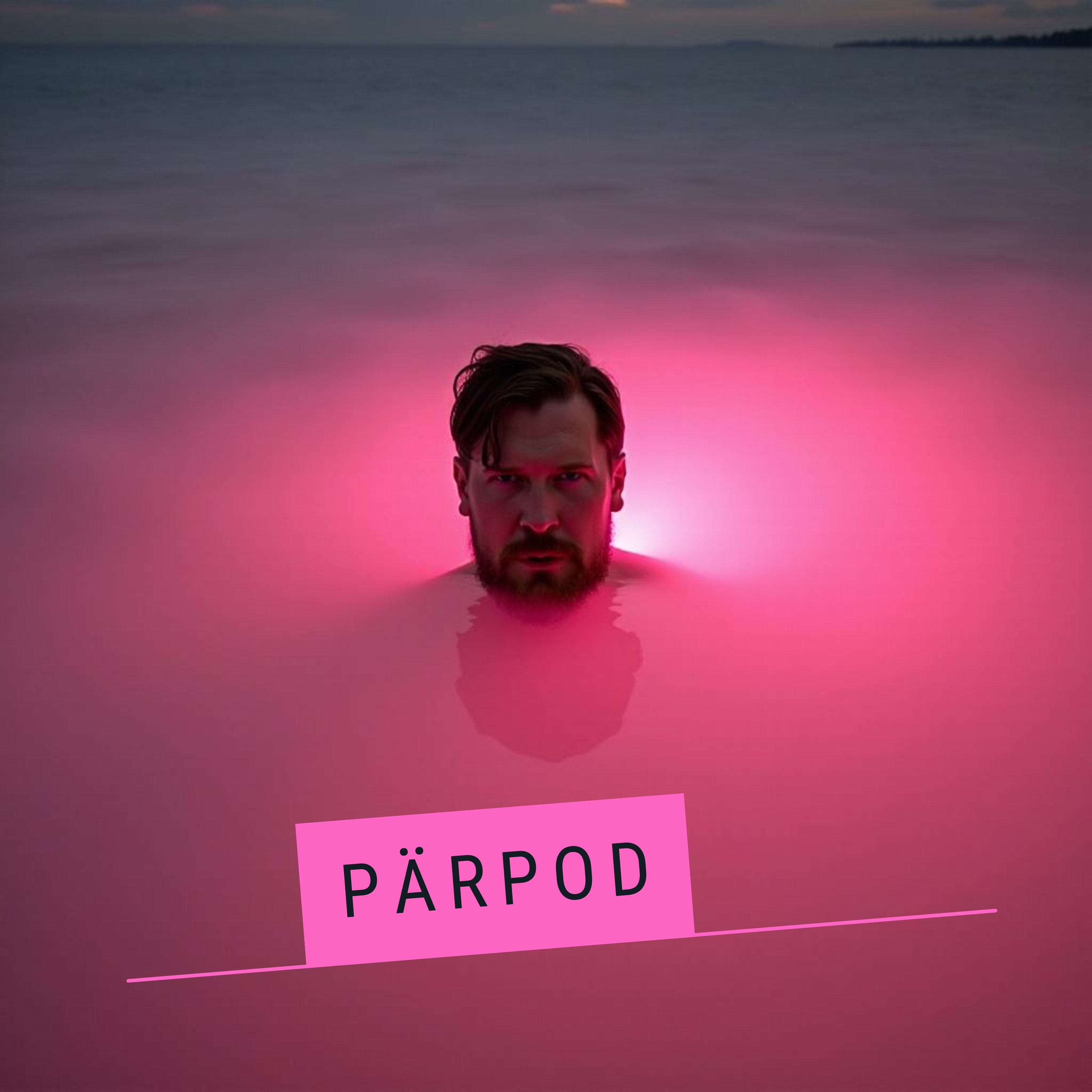
Settled Custard: Building a Place to Finish Things
The Problem with Finishing
Here is a confession that does not sound like a confession. A man in a mountain village in northern Sweden has built over seventy software services. Podcast pipelines, newspaper platforms, roller derby scoring systems, hotel booking bots, image processors, life analytics dashboards. He has built tools that track his budget, tools that send him reminders, tools that let two different AI assistants pass notes to each other like schoolchildren in class.
Seventy services. And yet the thing he cannot build is a place to put the finished work.
Because here is the thing about building seventy services when you have ADHD. Every single one of them exists in a state of permanent almost. Almost done. Almost shipped. Almost ready for someone to see. The code runs, the features work, the database hums along on a VPS in Paris. But the act of declaring something finished, of putting it somewhere and saying this is what I made, look at it. That act never happens.
Not because the work is not good. Because finishing is its own skill, and it has nothing to do with building.
So one night, past midnight in late March twenty twenty six, he sits down to spec out the one thing that might solve this. Not another tool. A destination. A place where things go when they are done. He calls it parpod dot net.
The Spec That Refused to Be Ordinary
The first draft came out of a conversation with Claude on the web, a chatbot with no memory of the seventy services, no sense of the pattern. It produced what you might expect. A content management system. Sections for podcasts, sections for writing, a clean hierarchy of categories.
And it was fine. Correct, even. But correct is not interesting. Correct is what gets you another service that sits on the VPS and does not quite finish anything.
Wait. If the whole point is that I cannot finish things, and the solution is a website where I publish finished things, what happens when I lose interest in maintaining the website?
That is the question that changes everything. Because a blog punishes you for not posting. A portfolio punishes you for not updating. Any system built on chronology has a clock embedded in it, ticking, counting the days since your last entry, silently broadcasting that you have stopped.
The spec needed something else. Something where silence is not decay.
A German Sociologist and Ninety Thousand Index Cards
Niklas Luhmann was a German sociologist who published fifty books and over six hundred articles. When people asked how he was so productive, he said he was not. He said his slip box was productive. He just talked to it.
A note that is not connected to this network will get lost. It is a disorder with non arbitrary internal structure.
Luhmann's Zettelkasten was a box of index cards. Ninety thousand of them, accumulated over forty years. But it was not a filing cabinet. It had no predefined categories, no alphabetical order, no taxonomy. Instead, each card was connected to other cards by a branching numbering system. Card one led to card one A which led to card one A one. Ideas spawned ideas, and the connections between them were the actual knowledge.
The word Zettelkasten means slip box. It is a German compound noun that, when spoken into a phone by a Swedish man and processed by speech to text software, comes out as Settled Custard.
Which is honestly a better name for a podcast series about this than anything you could come up with on purpose.
The Adaptation
Here is where it gets interesting. What happens when you take a system designed for private thinking and turn it into a public publishing platform?
It breaks. Obviously. Luhmann himself compared his notes to a septic tank. Useful but not for showing guests. The moment you imagine someone looking over your shoulder, you edit differently. You censor. You perform.
That is the standard critique, and it is valid. But the parpod dot net spec is not trying to publish a private Zettelkasten. It is trying to build a public system that borrows the principles. The crucial distinction: public first, not private with a window.
What gets borrowed: atomic standalone pieces. Explicit connections between them. Structure that emerges from the connections instead of being imposed. A network that grows more valuable as it gets denser.
What changes: the connections need to carry enough context for a stranger to follow them. The content has editorial state, draft, published, featured, archived, disproven. And crucially, the content is mixed media. Podcast episodes, essays, research findings, experiment logs. All equal citizens in the same web.
Nobody has done this. The research confirms it. There are beautiful text based digital gardens. Andy Matuschak's stacked panes. Gwern Branwen's obsessively archived long content. Maggie Appleton's evergreen notes with their seedling to mature growth stages. But none of them treat audio as a first class node in a knowledge graph. None of them let you follow a trail that alternates between reading and listening.
The Night the Spec Got Weird
Somewhere around one in the morning, the conversation turned a corner. The spec had its manifesto, its transparency rules, its content types. It even had a clever system for rating podcast production quality, from experimental rough cuts to fully remastered episodes with premium voices. Good features. Sensible architecture.
But then came the question that mattered.
What if the categories are not categories? What if they are just doors into the same room?
An ADHD finding about hyperfocus and time estimation. A Director experiment where an AI misjudged task complexity. A podcast episode about why the question how long will this take is always the wrong question. Three completely different content types. Three different tones. One thread of thought.
On first glance the connection seems random. On second glance it is obvious.
That is the Zettelkasten principle applied to publishing. The sections, the ADHD corner, the experiment logs, the podcast feeds, those are not rooms you put things in. They are doors you walk through to enter the same interconnected space. Once inside, you follow threads across everything.
The Double Closure Trick
Here is the part that is specifically designed for the ADHD brain, and it is almost devious in its simplicity.
Publishing a piece is one act of finishing. One hit of closure dopamine. But in this system, publishing also requires connecting the new piece to existing pieces. Explaining why this thing talks to that thing. Drawing the line and writing the reason on it.
That is two acts of finishing per publish. Two dopamine hits. The system is literally engineered to make the rewarding part happen twice.
That sounds like you are gamifying your own executive dysfunction.
Yes. Exactly. And the non linear associative thinking that ADHD brains do naturally, the thing that makes them jump between topics and see connections that sequential thinkers miss, that becomes the navigation model. The architecture of the site is itself an argument about how neurodivergent minds organize knowledge.
The structure is the thesis. That line made it into the spec, and it might be the most important sentence in the entire document.
The Thing Nobody Tells You About Digital Gardens
The research uncovered something uncomfortable. Most digital gardens die.
Too many digital gardens end up as not much more than a record of someone dicking around with their note-taking workflow for a couple of months.
That is Jack Baty, quoted on the IndieWeb wiki, and he is not wrong. The failure mode is well documented. You spend three weeks building the perfect system for organizing your thoughts. You publish twelve notes. You connect them beautifully. Then life happens, and the garden becomes a monument to a two week enthusiasm.
Maxwell Forbes visited several celebrated digital gardens and could not figure out where the real content was. Just bits and fragments everywhere. Gwern dot net, one of the most sophisticated knowledge sites on the internet, he called completely exhausting to try to read. A fractal tunnel of self links and footnotes.
So the spec includes a guard against this. The Zettelkasten model cannot be tested with filler data. You cannot draw connections between lorem ipsum paragraphs. Before a single line of code gets written, there needs to be a seed corpus. Real content. Real connections between real pieces. A map drawn on paper proving that the architecture works with actual ideas.
If the connections do not emerge naturally from the real content, the whole model is wrong. Better to discover that with a markdown file than with a deployed web application.
Content Can Be Disproven
There is one more principle in the spec that deserves attention, because it is rare. Content can be flagged as disproven.
Not deleted. Not quietly removed. Not edited to pretend the author always knew better. Flagged, visibly, with a correction that is itself a piece of content connected to what it replaces. The disproven piece stays in the network. The correction links to it and explains why the original was wrong.
This is what transparency looks like when you take it seriously. Not just crediting which AI model helped write something, although the spec requires that too. But admitting, publicly, in the structure of the site itself, that you changed your mind. That you were wrong. That the ADHD finding you published three months ago turned out to be an artifact of bad sleep, not a real pattern.
The correction is itself content. The change of mind is itself interesting. This is the opposite of how the internet usually works, where being wrong means the post quietly disappears.
Midnight Architecture
By two in the morning, the spec had become something none of the participants expected. Not a website brief. Not a feature list. A philosophical document about finishing, connecting, and being honest about how the work gets made.
The stack has not been chosen yet. The design direction is nearly empty. The navigation model is explicitly deferred. The landing page is a blank space with a note that says we will figure this out later.
And that is exactly right. Because the spec is not about what the website looks like. It is about what it means. Get the soul right and the framework follows. Get the framework right without the soul and you have built service number seventy one.
The next step is not code. The next step is five or six real pieces of content, laid out on a table, with lines drawn between them. See what a connection wants to be when it is made of actual ideas. See if the Zettelkasten metaphor holds weight or collapses under the pressure of real publishing.
And somewhere in the margin of the spec, there is a podcast series called Settled Custard. Named by a phone that misheard a German word spoken with a Swedish accent. Which, if you think about it, is a perfect example of how unexpected connections create meaning.
That is the whole thesis, right there. In a speech to text error.