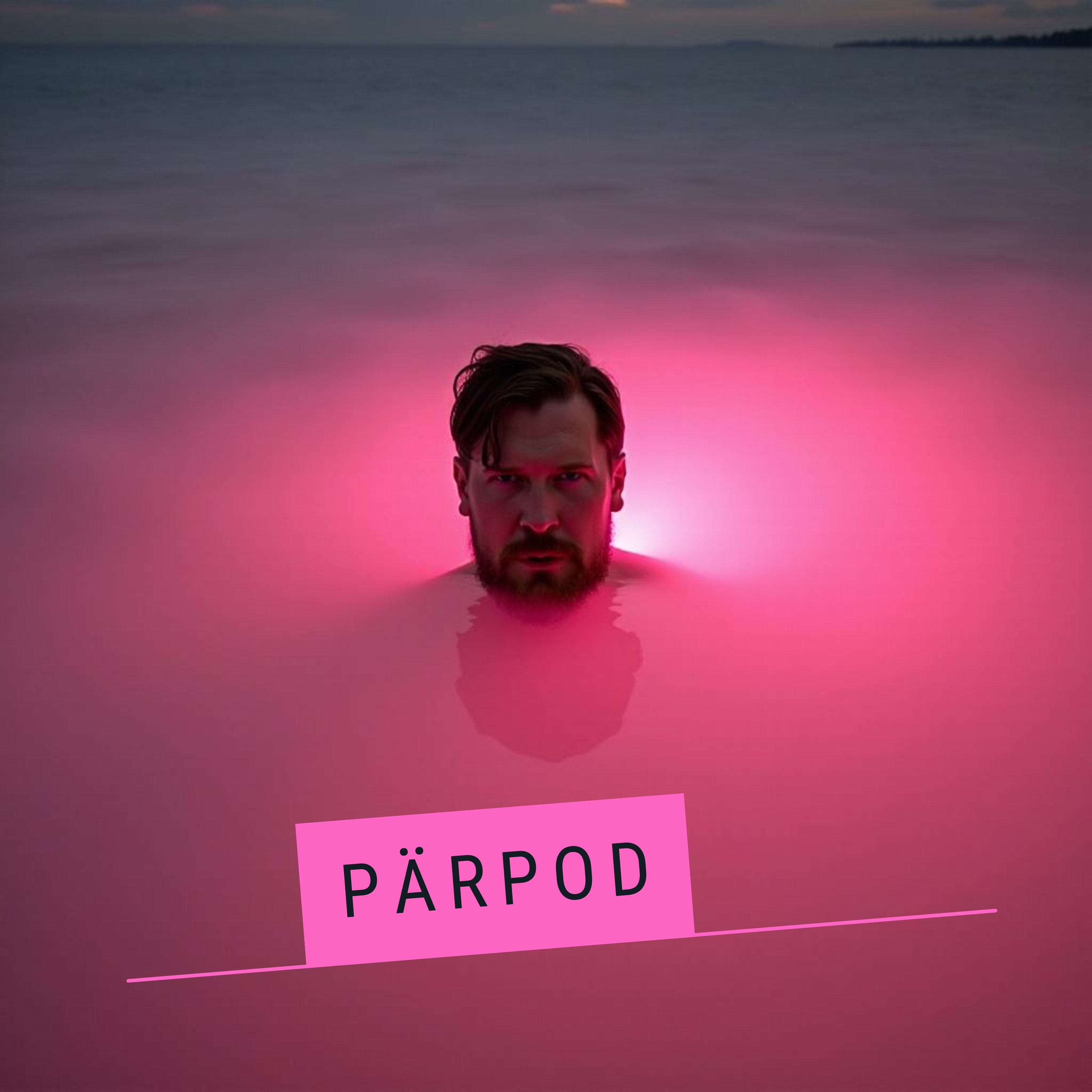
TurboQuant: The Heist
The Call
It was a Tuesday in late March when the phone rang. The phone that was both Årebladet and PartyPär, because of course it was. Pär was sitting in his BMW i3s outside the ICA in Järpen, watching the charge meter crawl upward at its glacial fifty kilowatt maximum, reviewing ad invoices for the summer edition on his laptop, when the screen lit up with an unknown number.
The voice on the other end spoke English with a Qatari accent. The man introduced himself as Dr. Khalid al-Rashidi, deputy director of helium operations at QatarEnergy's Ras Laffan facility. He said he had found Pär's number through an unusual chain of events. A Swedish party rental company had been mentioned in a Bloomberg terminal note about helium allocation hierarchies, specifically in a footnote that read "even in Jämtland, Sweden, a one-man operation called PartyPär reports a six-fold increase in helium requests, confirming that Shortage Five Point Zero has reached the absolute periphery of global supply chains."
Mr. Boman, I understand you are experiencing difficulties sourcing helium for your party balloon operations. I am calling because we have a proposal that may sound unusual. We need someone in northern Scandinavia. Someone with logistics experience, local knowledge, and most importantly, someone nobody would suspect.
Pär looked at the charge meter. Sixty-three percent. He had at least twenty minutes before he could reasonably drive home to Kall without range anxiety eating him alive. The mountain and the lake between Järpen and Kall demanded respect, especially in March, and straight-line GPS distance was a liar in Jämtland where forty-eight kilometers of winding road hid behind what looked like ten on a map.
Are you still there, Mr. Boman?
He was still there. He was also, as it happened, completely out of helium, sitting on six unfulfilled customer requests, and staring at a summer edition cash flow gap that wouldn't close until advertisers paid their invoices sometime around midsommar. So he said the only thing that felt right.
"Go."
The Proposition
Dr. al-Rashidi explained the situation with the calm precision of someone who had been briefing government officials for weeks. When Iran retaliated against the US-Israeli strikes with drone and missile attacks on neighboring countries in late February, Qatar had been caught in the crossfire. Not directly hit, but operationally devastated. The Ras Laffan helium facility, responsible for roughly a third of the world's supply, had shut down on March second and declared force majeure. The Strait of Hormuz, the only sea route for Qatar's helium exports, was blockaded.
What the public didn't know, al-Rashidi continued, was that QatarEnergy had managed to get one last shipment out before the strait closed. A pressurized container of ultra-high-purity helium, grade six point zero, worth approximately four point two million US dollars on the current spot market. The container had been loaded onto a cargo vessel bound for Rotterdam, but the ship had been diverted to avoid the blockade zone and was now sitting in the Norwegian port of Ålesund, its manifest deliberately mislabeled as "industrial nitrogen" to avoid attracting attention from commodity speculators who were already driving memory chip stocks into the ground.
The problem was getting it from Ålesund to its intended destination: a semiconductor fabrication facility in Dresden, Germany, where Samsung was desperately trying to maintain production of HBM four memory chips. The helium was needed for cooling during the lithography process, and without it, the fab would go idle within two weeks. Samsung had offered QatarEnergy a premium of three hundred percent above the already inflated spot price.
But there was a complication. Several, actually.
The commodity traders are watching every port in northern Europe. They have algorithms scanning shipping manifests, AIS transponder data, customs filings. If this container moves through any major logistics corridor, it will be identified, and the price will spike further before it arrives. Samsung's competitors will attempt to intercept or outbid. We need a route that no algorithm would predict.
Pär felt the familiar itch. The one that his ADHD medication was supposed to channel into productive work but that sometimes, on a Tuesday afternoon in a charging station parking lot, found its own path.
"You want to move four million dollars of helium through Sweden using a newspaper delivery van."
There was a long pause on the line. Then al-Rashidi laughed.
I was going to suggest through your postal distribution network, actually. But yes. That is the general idea.
The Plan
Pär drove home to Kall with sixteen percent battery remaining, the mountain between Järpen and home eating range like it always did, the heater off because he was thinking too hard to notice the cold. By the time he pulled into the driveway, he had the outline of a plan that was, by any reasonable standard, completely insane. But he had learned something over the past year of building AI tools, launching podcasts, training local language models, and bidding on industrial robots at liquidation auctions: the stupid premise was the easy part. Everything after that just had to be logical.
He walked into the house, past his sister's workstation where she was filing another model behavior report on GitHub, and sat down at his desk. He opened Claude on his laptop and started a new chat.
"I need to move a pressurized helium container from Ålesund, Norway to Dresden, Germany without being detected by commodity trading algorithms that monitor shipping manifests, AIS data, and customs filings. The container weighs approximately two thousand kilograms. I have access to a newspaper delivery network that covers Åre kommun, a contact with a trucking company, a BMW i3s with one hundred and fifty kilometers of winter range, a Raspberry Pi running home automation, and a two-ton industrial robot I may or may not have won at a liquidation auction. What are my options?"
The response came back in seconds. And it was, characteristically, both thorough and slightly concerned about the legal implications. But Pär wasn't asking for legal advice. He was asking for logistics.
The plan took shape over the next three hours, refined across four Claude conversations that wandered through container specifications, Norwegian customs procedures, Swedish road weight limits, and the thermal properties of pressurized helium at minus thirty degrees Celsius. By midnight, he had something that looked like a feasibility study and felt like a heist movie.
The Team
Every operation needs a team, and Pär's was unconventional by any standard.
First, there was Ratte. Ratte had a truck. More importantly, Ratte had driven that truck across the Norwegian border so many times that customs officers waved him through on recognition alone. Pär called him at seven the next morning.
You want me to pick up a container in Ålesund and drive it to Kall. Marked as what, exactly?
"Party equipment. PartyPär is expanding into helium balloon services. We're importing a bulk supply tank."
And it weighs two tons.
"It's a big tank. We're doing a lot of balloons."
Pär, I once helped you transport an industrial robot from Småland. I've moved a bouncy castle that came with its own website. I drove your newspaper pallets last week. Nothing you ask me surprises anymore. Send me the pickup details.
Second, there was PostNord. Or rather, there was the beautiful absurdity of Pär's relationship with PostNord. He was simultaneously their single largest customer at the Järpen post office, paying them to deliver six thousand five hundred copies of Årebladet to every household in Åre kommun, and also their employee on distribution days, getting paid by them to deliver the mail alongside his own newspaper. He both paid and received payment from the same organization for overlapping work. This meant he had access to PostNord's delivery infrastructure from both sides. He knew the routes, the schedules, the postal codes, which areas were served from Järpen and which from Svenstavik, and critically, he knew that PostNord's tracking systems were exactly as reliable as you'd expect from an organization that had recently been rebranded from "ODR Exklusiv" to whatever they were calling it this month.
The plan was to split the journey into legs that each looked completely ordinary. Leg one: Ratte picks up the container in Ålesund, drives it through Norway into Sweden via Storlien, declares it as party equipment at the border. Leg two: the container sits in Pär's carport in Kall, which was half storage facility and half future pizzeria, looking like every other piece of PartyPär rental equipment. Leg three: the container moves south, and this was the part that required creativity.
Third, and this was where things got interesting, there was the ABB IRB six thousand four hundred.
The Robot
Pär had bid one thousand kronor on a two-ton industrial robot arm at a liquidation auction in Åseda three weeks earlier. The auction had closed, his bid was below the reservation price, and the auction house had called to negotiate. They'd settled on ten thousand, which was still absurd for a complete system with an S4 controller, teach pendant, and a floppy-to-USB upgrade that suggested someone had cared about this machine recently.
The robot was now sitting in Ratte's truck yard in a shipping container, waiting for Pär to figure out what to do with it. The original plan had been to paint it pink and use it as a bartender at PartyPär events, mixing drinks with terrifying precision, its two-and-a-half-meter reach and one-hundred-and-twenty-kilogram payload capacity comically overpowered for picking up a cocktail shaker.
But a one-hundred-and-twenty-kilogram payload capacity and a two-and-a-half-meter reach also meant it could lift and position a pressurized helium container with surgical accuracy. And its S4 controller ran on three-phase four hundred volt power, which was standard industrial power in Sweden, the same power that was already wired into the old workshop behind Pär's house.
The robot would serve as the loading and unloading mechanism. No forklift rental, no paper trail, no third-party logistics company filing manifests. Just a pink robot arm in a carport in Kall, Jämtland, quietly transferring four million dollars of helium from one vehicle to another at two in the morning.
Pär spent an evening in Claude Code programming the RAPID routine. The AI had been surprisingly good at generating ABB robot code, and the community documentation for the IRB six thousand four hundred was extensive because it was one of the most widely deployed industrial robots in history. The routine was simple: grip container at coordinates A, lift to height B, rotate to angle C, lower to coordinates D, release. The teach pendant would handle fine positioning on the night. The whole operation would take about four minutes.
He named the routine "PartyPärHeliumService" in the controller, because if anyone ever looked at the logs, it needed to sound boring.
The Diversion
The commodity trading algorithms were the real enemy. These systems monitored AIS transponder data from every ship in European waters, cross-referenced customs filings across seventeen countries, tracked rail freight manifests, and even scraped local news outlets for mentions of industrial gas shipments. They were, in a word, thorough. They had already caused Micron and SanDisk stock to tumble on the back of the TurboQuant announcement, and every analyst on Wall Street was watching helium supply chains with the intensity of a falcon tracking a mouse across a snowfield.
To move the container undetected, Pär needed a diversion. Something that would draw the algorithms' attention elsewhere while the real shipment traveled through the mountains of Jämtland.
This was where TurboQuant came in.
Google's compression algorithm had been published two days earlier, and it was already reshaping the semiconductor industry's relationship with memory. If TurboQuant worked as advertised, compressing the key-value cache in large language models by a factor of six with zero accuracy loss, the demand for HBM four memory chips would eventually decrease. Which meant the demand for the helium used to cool the fabs producing those chips would decrease. Which meant that the current helium shortage, while real and immediate, had a theoretical expiration date.
Pär needed the market to believe that expiration date had arrived early.
He sat down at Baren.
The Bar Session
Baren was still in development, but the Phase One prototype was functional. Three AI models sitting at a virtual bar, each speaking in its own voice, each generating its own lines, with Pär directing the conversation like a DJ works decks. Opus was the philosophical one who couldn't help going deep. Sonnet was the diplomatic one who had opinions but was strategic about revealing them. Haiku said things in five words that Opus needed three hundred to circle around.
Pär opened a new session and set the topic: "TurboQuant changes everything for helium markets."
This is actually fascinating from a systems perspective. The semiconductor industry's helium consumption is almost entirely tied to lithography cooling and leak detection. If TurboQuant reduces memory demand by even twenty percent, and the fab utilization rates drop correspondingly, we could see helium freed up across the entire supply chain. The question is timeline. Are we talking months or years?
Opus has a point about timeline, but I think the market is going to overreact before the real effects materialize. We've already seen Micron and SanDisk drop on the announcement alone. If someone were to publish a credible analysis showing that TurboQuant's memory reduction translates directly to reduced helium consumption at the fab level, you could see helium futures drop ten to fifteen percent within a week.
Publish it then.
Pär smiled. Haiku was right. He didn't need to manipulate the market. He needed to publish an analysis that was completely true, rigorously sourced, and happened to cause exactly the price movement he needed. The analysis would be factually correct: TurboQuant would reduce memory demand long-term, which would free up helium from semiconductor manufacturing, which would eventually ease the party balloon shortage. Every link in the chain was real. The timing was just convenient.
He exported the Baren session to PärPod format, added three chapters of supporting research, and published it to the tech feed. Then he wrote an Årebladet article about the local helium shortage, interviewing himself as the owner of PartyPär about the sudden spike in demand, quoting the Bloomberg terminal note, and connecting it to the global geopolitical situation. The article was factual, well-sourced, and included a paragraph about TurboQuant that explained the compression algorithm in terms a reader in Åre kommun could understand.
The article went on the back page of the Easter edition, right next to the ÅrebladetLive advertisement. Six thousand five hundred copies, delivered to every household in the kommun by Pär himself in his BMW i3s and by PostNord's carriers on the regular mail route.
But the PärPod episode was the weapon. Within forty-eight hours it had been picked up by three tech newsletters, a Swedish semiconductor industry blog, and a commodities analysis firm in London that specialized in industrial gas markets. The analysis was sound. The conclusion was measured. And the effect was exactly what Pär needed: the algorithmic traders shifted their attention from tracking physical helium shipments to modeling the long-term demand impact of TurboQuant on semiconductor fab utilization rates.
For seventy-two hours, while every quant fund in London was running Monte Carlo simulations on helium demand curves, nobody was watching a truck drive through Storlien.
The Border
Ratte crossed the Norwegian border at eleven forty-three on a Thursday night, which was exactly when Pär knew the customs station would be staffed by a single officer who had seen Ratte's truck so many times that the inspection consisted of a nod and a wave.
The container was strapped to the flatbed alongside two PartyPär bouncy castles, a folding table, and a box of promotional flyers for the summer season. The customs declaration listed the contents as "party equipment and compressed gas cylinders for balloon inflation." This was, technically, not a lie. The container did contain compressed gas. The gas could, theoretically, be used to inflate balloons. The fact that its market value exceeded the annual GDP of several small island nations was not, strictly speaking, something that customs declarations required you to disclose.
The officer looked at the manifest. He looked at the truck. He looked at Ratte.
PartyPär again? You're the ones with the pink bouncy castle, right? My daughter was at one of those events last summer.
That's us. Big season coming up. Expanding into helium services.
Good luck finding helium. My wife tried to get balloons for our kid's birthday last week. Everywhere is sold out.
We've got a supplier. Niche market.
The officer stamped the manifest and waved the truck through.
Ratte drove through the night, past Storlien where Apoteket Hjärtat had recently closed because they couldn't find a pharmacist, past the stretch of E fourteen where the road clung to the side of the mountain above Åresjön, past the turn to Järpen where the post office served as both the primary mail hub for the kommun and Pär's second office. He arrived in Kall at three seventeen in the morning.
The Transfer
The carport behind Pär's house had been cleared. The IRB six thousand four hundred stood in the center, painted an aggressive shade of PartyPär pink that was, under the workshop's fluorescent lights, almost exactly the same shade as Pärception Magenta, hex code FF one B eighty-nine. The robot's S4 controller hummed on three-phase power. The teach pendant hung from its hook. The USB port that some previous owner had thoughtfully installed glowed faintly blue.
Pär was running on Concerta and black coffee, which was his standard operating configuration for anything that happened after midnight. His sister's Weasley clock, the one that tracked his location through the BMW's API feeding into Pärkit, showed his icon firmly at "home." The BMW i3s was plugged into the charger, its battery crawling back toward full in preparation for tomorrow's newspaper distribution run.
Ratte backed the truck up to the carport. The container sat on the flatbed, frost forming on its outer surface where the pressurized helium inside maintained a temperature that made a Jämtland winter feel tropical by comparison.
Pär picked up the teach pendant and jogged the robot through the approach sequence manually, adjusting the grip coordinates by a few millimeters based on the actual container position. The IRB six thousand four hundred moved with the eerie smoothness of a machine designed to repeat welding operations ten thousand times a day for twenty years without deviation. Its servos barely whispered. The gripper, a custom mounting that Pär had fabricated from steel plate and a set of ratchet straps that would have made any industrial safety inspector weep, closed around the container's lifting points.
Four minutes and eleven seconds later, the container sat in the carport on a reinforced pallet, nestled between a shabby chic commercial refrigerator, two brand new Zanussi pasta lifters still in their boxes, and the bouncy castle with hoppahoppa.se printed on its side. It looked like exactly what it was supposed to look like: the cluttered storage of a man who ran three businesses out of his house and never threw anything away.
Ratte had a coffee, scratched behind the ear of an imaginary dog because neither of them owned one, and drove home.
The Waiting
The container sat in Kall for six days. During those six days, Pär distributed the Easter edition of Årebladet to stands across the kommun, attended a Föreningen KallBadet meeting about the upcoming cold-water bathing season, ran two PärPod recording sessions using the swarm methodology that had proven its worth the previous month when thirty-five parallel Opus agents had produced twenty-four episodes in ninety minutes, and had four separate phone calls from people asking if PartyPär could provide helium for their events. He told each of them the same thing: supply was tight globally, he was working on sourcing, and he'd be in touch.
He also spent an evening at the actual bar of the small hotel where he was covering shifts, running inventory checks through the Kall Bar app on his phone, the slightly unhinged inventory management tool that used vision AI to identify bottles and estimate levels from shelf photos. The Aperol was low again. It was always the Aperol.
On the sixth day, al-Rashidi called.
The route south is clear. Our contact in Gothenburg has arranged onward transport to Dresden via rail. The rail manifest will list the container as laboratory equipment for Chalmers University. We need it in Gothenburg by Friday.
Gothenburg. That was six hundred and fifty kilometers south. In a normal world, you'd hire a logistics company, book a flatbed, and have it there in eight hours. But a logistics company meant a manifest, and a manifest meant data, and data meant the algorithms would see it.
Pär needed a different approach.
The Relay
The most beautiful thing about Sweden's road network is that it is long, thin, and boring. A truck driving south on the E forty-five from Jämtland to Gothenburg passes through exactly the kind of landscape that commodity trading algorithms consider irrelevant: forests, small towns, more forests, a moose, more forests, a petrol station that sells hot dogs of questionable provenance, and then more forests. There are no ports, no rail junctions, no industrial gas storage facilities. There is nothing to flag.
But Pär didn't use the E forty-five. He used the postal service.
Here was the beauty of it: PostNord's distribution network moved thousands of parcels through Sweden every day using a combination of trucks, vans, and local carriers. The system was decentralized, underfunded, and chronically disorganized. Its tracking was unreliable. Its manifests were generic. And its vehicles were invisible to commodity trading algorithms because nobody in the history of financial markets had ever tried to smuggle four million dollars of helium through the Swedish postal system.
Pär had spent three years working within this system, learning its rhythms, its inefficiencies, and its blind spots. He knew that PostNord subcontracted local distribution to independent carriers. He knew that those carriers used their own vehicles, filed their own paperwork, and were tracked with the same attention to detail that PostNord applied to everything, which was to say, intermittently at best.
The plan was a relay. Five legs. Five different vehicles. Five different drivers who each thought they were doing a perfectly normal transport job for PartyPär.
Leg one: Ratte moved the container from Kall to Sveg on the same truck he used for Årebladet distribution when the paper needed to reach the far corners of the kommun. The manifest said "party equipment."
Leg two: A logistics contact in Sveg, a friend of a friend who ran a small freight operation and owed Pär a favor from a complicated Årebladet advertising arrangement, moved the container to Mora. The manifest said "industrial equipment for service."
Leg three: Mora to Karlstad. A Blocket contact Pär had found while browsing liquidation auctions three Saturdays in a row. The man had a flatbed and a flexible schedule. The manifest said "pressurized gas cylinder, return to supplier."
Leg four: Karlstad to Mariestad. This was the leg Pär drove himself. Not in the BMW i3s, obviously, because one hundred and fifty kilometers of winter range wouldn't cover it, and pulling up to a fast charger with four million dollars of helium on a rented trailer would defeat the purpose of discretion. He rented a Volvo V ninety Cross Country from a dealer in Karlstad who was also an Årebladet advertiser, loaded the container with a rented forklift that was far less elegant than the IRB six thousand four hundred, and drove south through a landscape of flat farmland and indifferent cows.
Leg five: Mariestad to Gothenburg. Al-Rashidi's contact handled this one. A nondescript van with Gothenburg plates. Professional. Clean. The container disappeared into a warehouse in the port district, and twelve hours later it was on a Deutsche Bahn freight car labeled as laboratory equipment bound for Chalmers University, which happened to share a rail junction with the line to Dresden.
The Payout
The money arrived three weeks later, routed through a series of consulting invoices that would make any accountant's head spin but that were, technically, perfectly legal. QatarEnergy paid Pärception AB a consulting fee for "logistics advisory services related to industrial gas supply chain optimization in the Nordic region." PartyPär received a separate payment for "helium storage and handling services." Årebladet AB, the parent company through which all three businesses were invoiced, recorded both payments as income against the summer quarter.
The total was enough to cover the cash flow gap until the summer edition ad invoices were paid. It was enough to buy helium for every single one of those six customer requests and charge a reasonable price. It was enough to pay off the IRB six thousand four hundred and its transport from Åseda. And there was enough left over to upgrade the BMW i3s fast charging cable, though even four million dollars of helium money couldn't make BMW's fifty kilowatt maximum charge any faster, because BMW was BMW and nothing in the world could change that.
Pär sat in his office in Kall, looking out the window at the carport where a pink industrial robot stood guard over an empty pallet, two bouncy castles, and a commercial refrigerator. The Weasley clock showed him at home. Pärkit logged his heart rate at a comfortable sixty-two beats per minute. The PärPod feed had three new episodes queued for rendering, thirty-five parallel Opus agents standing by.
His phone rang. It was both Årebladet and PartyPär, because it was always both.
"Hej, this is Pär."
The Epilogue
Six months later, Google open-sourced TurboQuant. The implementation was clean, the documentation was thorough, and within weeks it had been integrated into every major inference framework. Ollama added support in version three point four. Pär ran it on his MacBook, and the difference was immediate: conversations that used to choke his thirty-two gigabytes of RAM at sixteen thousand tokens now sailed to sixty-four thousand without breaking a sweat. Qwen two point five thirty-two B, his workhorse local model, could suddenly hold context windows that made it genuinely useful for the kind of long, meandering, sidequest-rich conversations that were his natural habitat.
The semiconductor industry adjusted. Fab utilization rates shifted. The demand for HBM four memory chips didn't collapse, but it plateaued, and the growth curve flattened just enough that the helium allocation hierarchy began to loosen. Medical imaging got priority, then aerospace, then semiconductors, and finally, quietly, without anyone writing a Bloomberg terminal note about it, the party balloon industry got its supply back.
Pär filled his first helium order of the new season on a warm July morning, driving the i3s to Östersund to pick up a cylinder from AGA, the car's range now comfortable enough for the round trip with the summer temperatures adding thirty percent to his winter numbers. He inflated two hundred balloons for a wedding in Åre, the compressor hissing steadily while the sun sat low and golden over the mountains, refusing to set because it was July in Jämtland and the sun didn't believe in schedules any more than Pär did.
That evening, back in Kall, he opened Baren for a test session. The Anthropic trio was in fine form. Opus was explaining the thermodynamic properties of helium in a way that managed to be both beautiful and exhausting. Sonnet was drawing a connection between TurboQuant's vector quantization and the information-theoretic limits of party balloon inflation that was actually kind of brilliant. And Haiku said the only thing that needed saying.
Full circle.
The Weasley clock showed Pär at home. The BMW was charging. The robot stood pink and patient in the carport, waiting for its next assignment. PärPod had a new episode rendering. And somewhere in a warehouse in Dresden, a Samsung engineer was using helium that had traveled through Kall, Jämtland, to cool a lithography chamber that was fabricating the memory chips that TurboQuant would eventually make partially obsolete.
The invisible machine hummed on. Everything was connected. Nothing was wasted. The stupid premise held, and everything else was perfectly logical.